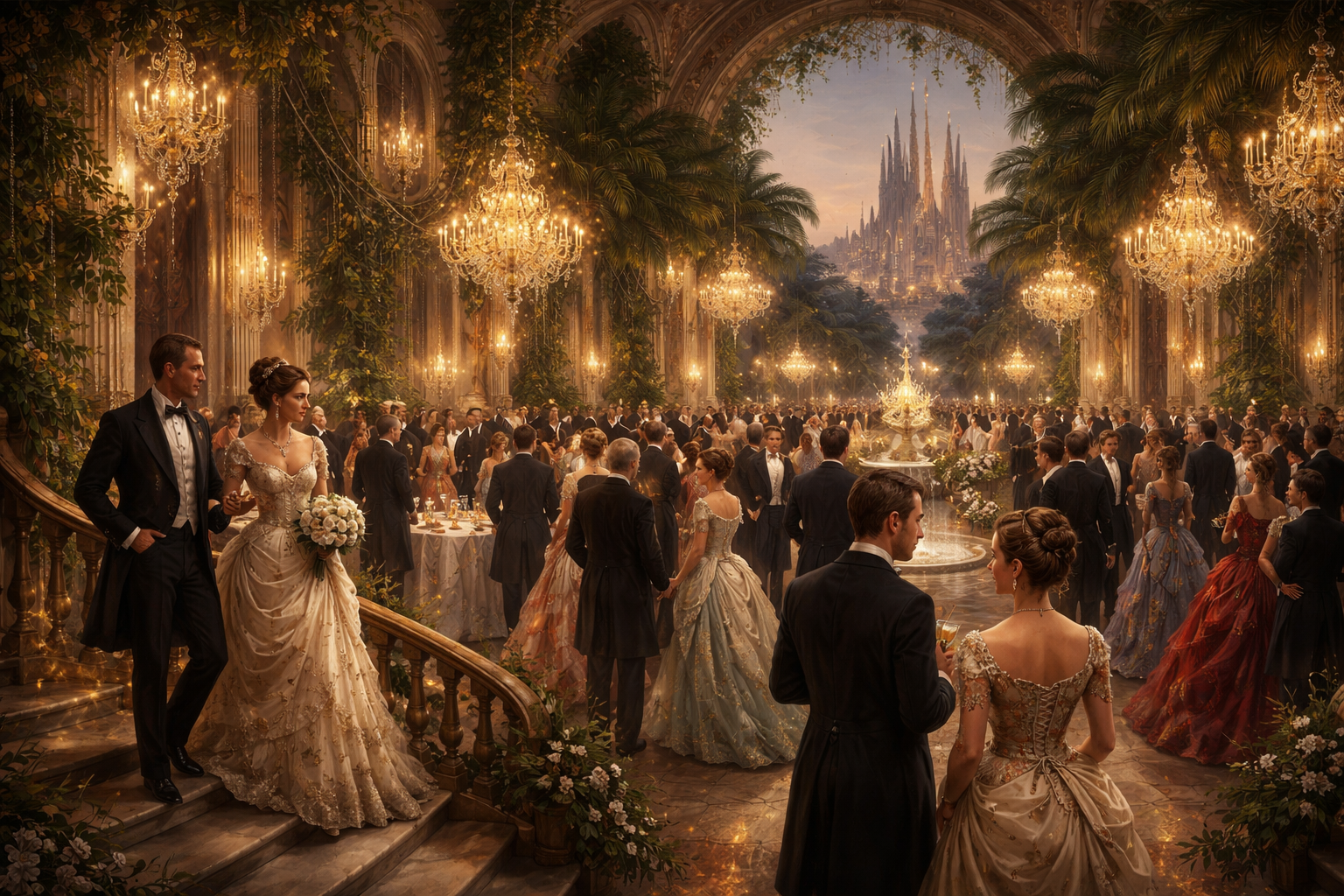
A Vivid Portrait of 19th-Century Barcelona
Sabastian Gall’s novel Barcelona – Encounters offers a striking and vivid cross-section of late 19th-century Barcelona. Here, history is not just a backdrop. It becomes almost a central character. At the heart of the story is the meeting between Eusebi Güell and Antoni Gaudí. Gall presents this moment as more than chance. It feels inevitable. It is the meeting of capital and genius.
Gaudí and Güell: Reality Over Myth
One of the novel’s greatest strengths is its realism. Gall avoids idealization. Gaudí is not a mythical figure. He is an obsessive young man living in modest conditions. He develops his ideas in workshops, on dusty construction sites, and in dim cafés. Güell represents the rising industrial elite. He is calculating, yet not without sensitivity. He understands that beauty can serve political and economic goals.
Power and Balance: Rius i Taulet
The third key figure, Francesc Rius i Taulet, stands out in Gall’s interpretation. He is not portrayed as a hero. Instead, he is a pragmatic manager. He leads a city caught between Madrid’s central authority and Barcelona’s ambitions. The novel shows this tension with subtle precision. The absence of a “Catalan governor” is not just administrative. It becomes a constant political pressure behind every decision.
Everyday Life and Urban Change
Gall excels at depicting everyday life. The novel captures the unrest of workers and the noise of rapid urban growth. The dusty streets of the Eixample come alive. So do the chaotic preparations for the World’s Fair. These details create a rich and believable setting. The 1888 World’s Fair serves as the story’s climax. It is where politics, money, and art finally meet.
A City Built on Connections
The novel’s greatest achievement lies in its perspective. Barcelona’s rise is not shown as the work of a single genius. Instead, it emerges from fragile alliances, competing interests, and chance events. Gall avoids both romanticism and cynicism. His tone remains precise and balanced.
Why It Still Matters Today
For modern readers, the story feels surprisingly relevant. Issues like urban development and elite influence remain familiar. Questions of cultural identity and political compromise still shape cities today. This is what gives the novel its lasting impact.