There are books that entertain, and there are books that quietly preserve time. My Life – Childhood, the first volume in Sabastian Gall’s autobiographically inspired My Life series, belongs firmly to the latter category. It is a deeply reflective coming-of-age narrative that captures not only the fragile emotions of childhood but also the profound historical transformation of Central Europe during the final years of socialism and the dawn of a new capitalist era.
Set primarily between the early 1980s and the mid-1990s, the novel follows the life of a young boy named Sebestyén. Through his memories, observations, and everyday experiences, readers are transported into a world that feels both intimate and historically significant. This is not merely the story of one child growing up in Hungary; it is also a portrait of a society standing at the threshold of change.
With a warm, observant narrative voice and a strong sense of place, Sabastian Gall offers readers a literary window into a childhood shaped by family, tradition, shifting political landscapes, and the universal challenges of growing up.
A Story That Begins with Birth
The novel opens with a moment of profound personal significance: the birth of Sebestyén’s younger brother. This event is more than a simple family milestone—it establishes the emotional core of the story. From the beginning, the relationship between the two brothers forms a central thread throughout the narrative.
Sebestyén, the older sibling, witnesses the arrival of Gyuri with a mixture of curiosity, responsibility, and the subtle confusion that often accompanies childhood transitions. Through this early scene, Gall immediately anchors the story in family life, creating a foundation upon which the rest of the narrative unfolds.
The bond between the brothers evolves naturally as the years pass. Sometimes they are allies exploring the world together; other times they mirror the familiar tensions of sibling rivalry. Yet beneath these everyday conflicts lies a quiet affection that defines their shared childhood.
In many ways, Gyuri’s birth acts as the starting point of Sebestyén’s own awareness of the world. It marks the moment when childhood begins to stretch beyond the self and into relationships, responsibility, and memory.
Growing Up in Pesterzsébet
Sebestyén spends most of his childhood in Pesterzsébet, a district of Budapest known for its working-class character and tight-knit community life. Gall portrays the neighborhood with remarkable authenticity, capturing the rhythms of daily life in late socialist Hungary.
The streets, schools, playgrounds, and apartment buildings become living characters in their own right. Readers encounter a world where children play outside until evening, where neighbourhood friendships form quickly, and where everyday routines create the backdrop for countless formative moments.
School plays an important role in Sebestyén’s development. Like many children of the era, he navigates a structured education system shaped by socialist ideals. Teachers, classmates, and schoolyard adventures provide moments of humour, tension, and discovery.
Gall’s strength lies in his ability to observe small details that resonate universally. The nervous anticipation of a new school year, the quiet pride after a good grade, the embarrassment of youthful mistakes—these moments transcend geography and time. Even readers unfamiliar with Hungary’s history will recognise the emotional truths embedded in Sebestyén’s experiences.
Summers in Dunaharaszti
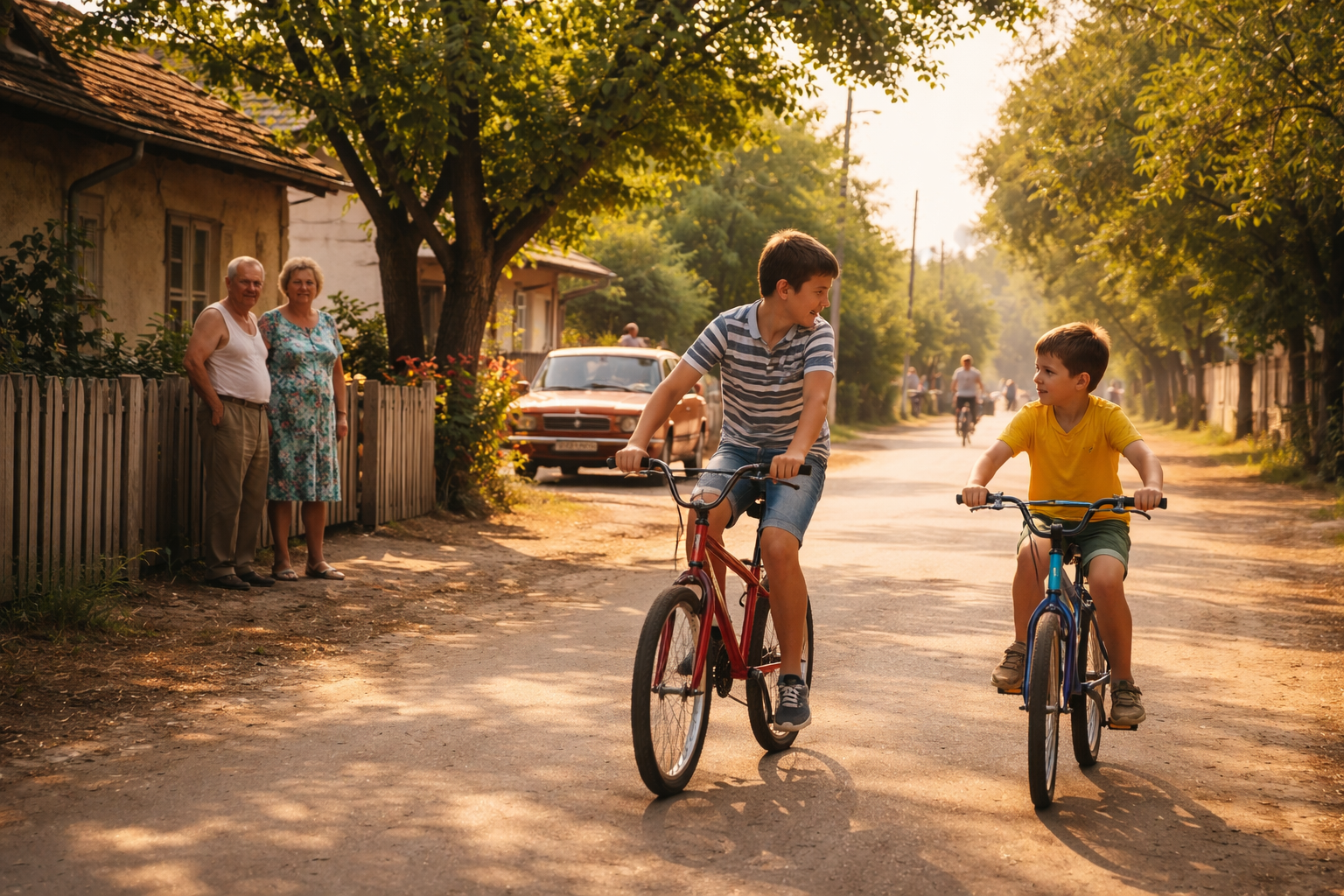
While Budapest forms the urban core of Sebestyén’s life, the summers tell a different story. Every year, he spends long holidays in Dunaharaszti with his grandparents, who had previously relocated from Yugoslavia.
These summer chapters carry a distinct atmosphere. The pace slows, the environment changes, and the narrative shifts toward family heritage and cultural roots.
In Dunaharaszti, Sebestyén experiences a different rhythm of life. Days stretch long beneath the summer sun, filled with outdoor adventures, family gatherings, and stories from older generations. The village setting offers a contrast to the structured routine of city life, allowing the boys to explore a freer, more imaginative world.
Gall writes these scenes with particular warmth. The countryside becomes a place of emotional refuge, where traditions are preserved and family bonds deepen. Through conversations with grandparents and relatives, Sebestyén begins to understand the complex history of his family and their connection to the region.
These summer memories serve as emotional anchors throughout the book. They represent not only childhood freedom but also a bridge between past and present.
A Family Rooted in Two Worlds
One of the most distinctive aspects of My Life – Childhood is its exploration of cultural identity. Sebestyén’s mother’s family originates from Óbecse (today Bečej), a town in the Vojvodina region of the former Yugoslavia. They belong to the Bunjevac community, a South Slavic ethnic group with a unique cultural heritage.
Through these familial connections, the novel expands beyond the borders of Hungary. It touches upon the broader cultural landscape of Central Europe, where identities often overlap and histories intertwine.
Gall does not approach this topic in a heavy historical tone. Instead, the cultural background emerges naturally through family conversations, traditions, and shared memories. Readers encounter fragments of language, food, customs, and stories that reflect the complexity of this multicultural heritage.
For Sebestyén, these influences gradually shape his understanding of belonging. He grows up aware that his family history extends beyond Budapest, reaching across borders and generations.
Childhood in the Shadow of Historical Change
Although My Life – Childhood is deeply personal, it is impossible to separate the story from the political transformations of the era. The narrative unfolds during a pivotal moment in European history: the final years of socialist rule and the emergence of a new capitalist system.
Gall captures this transition with subtlety. The political changes rarely dominate the narrative directly; instead, they appear through the lens of everyday life.
Shifts in the economy, evolving social attitudes, and the gradual opening of society form part of the background against which Sebestyén grows up. Adults discuss news events, families adapt to new opportunities and uncertainties, and the atmosphere of the country slowly changes.
This approach allows the reader to experience history from a child’s perspective. Rather than presenting grand political analysis, the novel shows how large historical events filter down into ordinary households.
Through Sebestyén’s eyes, we witness a generation coming of age during a time when old structures were dissolving and new possibilities were emerging.
The Authentic Voice of Memory
One of the defining qualities of Sabastian Gall’s writing is his attention to authenticity. The narrative feels rooted in lived experience, enriched by sensory detail and emotional honesty.
Gall understands that childhood memories rarely appear in perfect chronological order. Instead, they surface as vivid fragments: a particular summer afternoon, a school corridor filled with noise, the smell of home cooking drifting through a family kitchen.
These moments accumulate gradually, forming a mosaic of Sebestyén’s early life. The author’s prose remains accessible and reflective, allowing readers to immerse themselves in the story without distraction.
This narrative style aligns closely with the traditions of autobiographical literature. While the novel reads as fiction, it carries the emotional weight of genuine recollection.
Brotherhood at the Heart of the Story
Throughout the book, the relationship between Sebestyén and Gyuri remains central. As the boys grow older, their bond evolves in complex and sometimes unpredictable ways.
They share adventures, arguments, discoveries, and secrets. Sometimes they support each other; sometimes they compete. Yet their connection remains unbreakable.
Gall captures the subtle dynamics of sibling relationships with remarkable clarity. The brothers mirror each other’s growth, representing two different paths through the same childhood landscape.
For readers, this relationship provides a powerful emotional anchor. It reminds us that childhood is rarely experienced alone—it unfolds within the intricate web of family life.
School, Friendship, and Everyday Adventures
Beyond family relationships, My Life – Childhood also explores the wider social world of growing up. Sebestyén encounters teachers who shape his outlook, classmates who become friends or rivals, and neighbourhood companions who share countless small adventures.
These episodes create a sense of realism that resonates deeply. Gall portrays the ordinary moments of childhood with care: playground games, classroom challenges, mischievous escapades, and quiet moments of reflection.
Such scenes remind us that childhood is often defined not by dramatic events but by the accumulation of everyday experiences.
For many readers, these passages will evoke their own memories of school corridors, summer afternoons, and youthful friendships.
The Road Toward Adolescence
As the narrative progresses, the tone gradually shifts. The carefree innocence of early childhood begins to give way to the complexities of adolescence.
Sebestyén starts to question the world around him. School becomes more demanding, social expectations evolve, and the future begins to feel closer.
This transition culminates in the closing scene of the novel. In June 1995, Sebestyén enrols at the Irinyi János Chemical Technical Secondary School. The moment symbolises the end of one chapter and the beginning of another.
Childhood, with all its memories and discoveries, now stands behind him. The path toward adulthood lies ahead.
Gall closes the book at precisely the right moment—just as the protagonist steps into a new phase of life.
A Portrait of an Era
Beyond its personal narrative, My Life – Childhood also serves as a cultural document. The book captures the atmosphere of Central Europe during a transformative period.
Readers encounter fragments of daily life that reflect the era: the educational environment of socialist Hungary, the evolving social landscape of the early 1990s, and the enduring traditions of families rooted in multiple cultures.
This historical context enriches the story without overwhelming it. Gall allows readers to observe the period naturally, through the eyes of a growing child.
The result is a narrative that feels both intimate and historically resonant.
Why My Life – Childhood Matters
In an age of rapid change and digital storytelling, books like My Life – Childhood remind us of the power of memory. Sabastian Gall offers a narrative that honours the quiet significance of ordinary lives.
The novel speaks to readers who value authenticity, cultural history, and deeply human storytelling. It invites us to reflect on our own childhoods and the moments that shaped who we became.
For those interested in Central European history, the book provides a unique personal perspective on a crucial era. For others, it offers a universal coming-of-age story rooted in family, friendship, and discovery.
The Beginning of a Larger Journey
As the first volume in the My Life series, My Life – Childhood lays the foundation for a broader literary journey. Sebestyén’s story is far from finished.
Future instalments promise to explore adolescence, adulthood, and the many experiences that follow the formative years of childhood.
Yet this opening volume stands confidently on its own. It captures a complete and meaningful chapter in the life of its protagonist.
Final Thoughts
Sabastian Gall’s My Life – Childhood is a quietly powerful novel that blends personal storytelling with historical reflection. Through the eyes of a young boy growing up in Budapest and spending summers in Dunaharaszti, readers gain insight into a world shaped by family heritage, cultural identity, and political transformation.
With warmth, honesty, and a deep sense of place, Gall invites us to step back into the landscapes of childhood—where small moments carry lasting significance and the future waits just beyond the horizon.
For readers seeking a thoughtful and evocative coming-of-age narrative, My Life – Childhood offers a compelling introduction to what promises to be a memorable literary series.