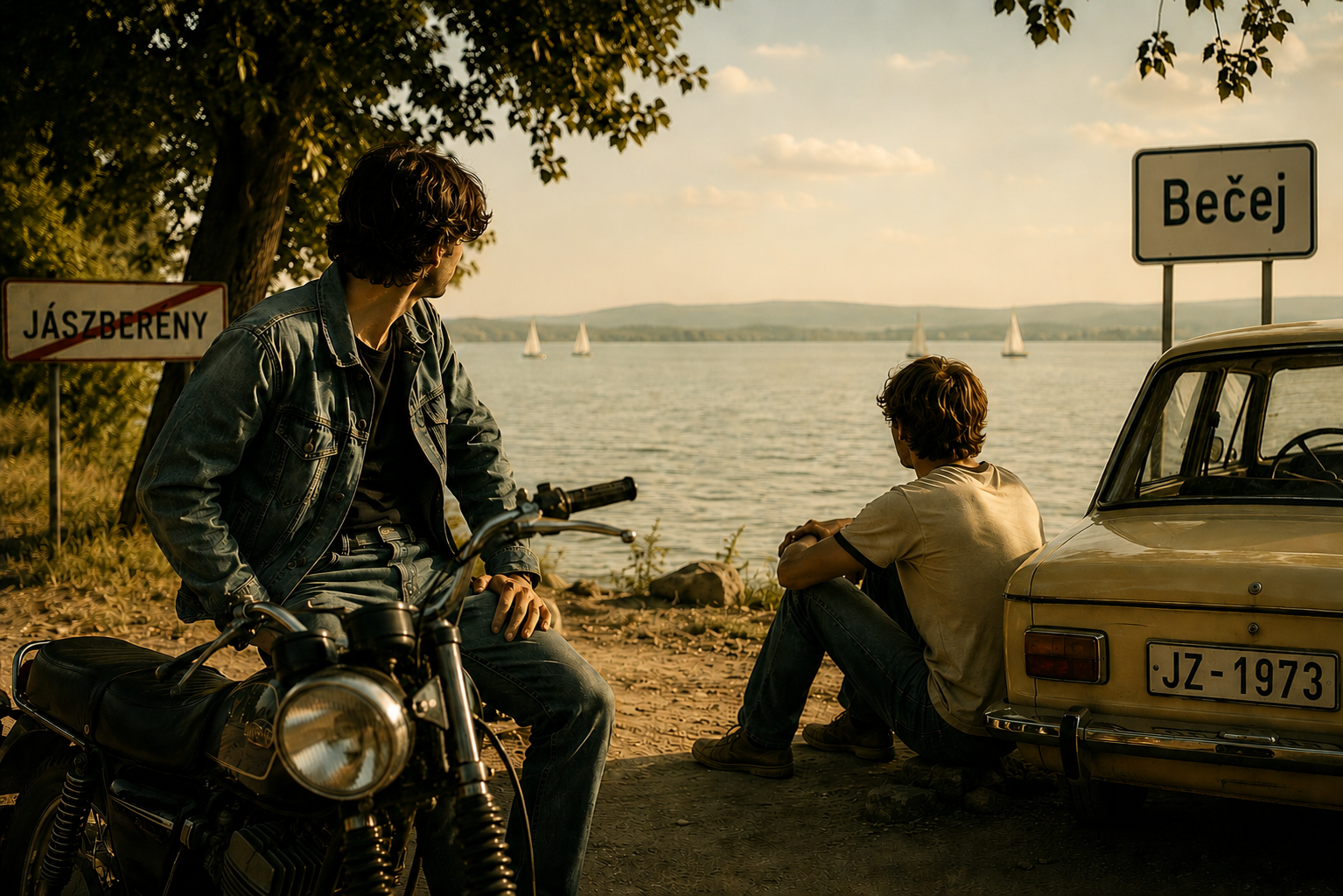
Readers searching for a thoughtful and emotionally rich historical novel will likely find something deeply memorable in Sabastian Gall’s 1973. This is not a book driven by dramatic twists or large political events. Instead, it is a carefully observed coming-of-age story that captures the atmosphere of Eastern Europe during the 1970s through ordinary lives, quiet tensions, and the emotional landscapes people carried within themselves.
For many readers, the novel’s strongest appeal will come from its authenticity. 1973 feels lived-in. It recreates a vanished world not through nostalgia alone, but through texture, memory, and emotional realism. The smell of summer streets, the sound of radios playing late into the evening, motorcycles disappearing down dusty roads, and family conversations filled with things left unsaid all contribute to a story that feels intimate and believable.
Readers who enjoy literary fiction centred on atmosphere and character rather than fast-moving plot will particularly appreciate Gall’s style. The novel unfolds slowly and deliberately, allowing relationships and emotions to develop naturally. It belongs to the tradition of reflective European storytelling where silence often reveals more than dialogue, and where emotional transformation happens gradually rather than dramatically.
Those who admire writers such as Milan Kundera, Sándor Márai, or even the cinematic storytelling found in classic Italian summer films may feel especially connected to 1973. The novel carries a similar sense of bittersweet beauty and emotional subtlety. There is warmth throughout the story, but also an awareness that youth, freedom, and possibility are temporary things.
At the centre of the novel are two families living in two different countries during the same summer. One family lives in Jászberény, Hungary. The other lives in Bečej, in former Yugoslavia. Although the towns are geographically close, the emotional atmosphere surrounding them feels remarkably different. Through these parallel lives, Sabastian Gall explores how culture, politics, and social expectations shape the way people imagine their futures.
Readers interested in Cold War-era Europe will find the novel particularly compelling because it focuses on everyday experience rather than ideology. Many books about Eastern Europe concentrate on politics, oppression, or espionage. 1973 chooses a different path. It asks quieter but more emotionally resonant questions: What did freedom feel like to ordinary people? How did young people dream about the future? What kind of emotional boundaries existed inside families and communities?
These themes make the novel especially appealing to readers fascinated by social history and cultural memory. Gall captures the subtle differences between life in 1970s Hungary and Yugoslavia with remarkable care. Hungary appears more stable, cautious, and emotionally restrained. Yugoslavia feels more open to Western influence, more restless, and slightly more optimistic. Yet the novel avoids simplistic comparisons. Neither world is idealised. Both contain forms of longing, compromise, and uncertainty.
This nuanced perspective is one reason the book feels mature and emotionally intelligent. Readers looking for simplistic political arguments may not find what they expect here. But readers interested in human complexity will discover a novel rich with emotional truth.
1973 will also resonate strongly with readers who enjoy coming-of-age fiction. At its heart, the novel is about adolescence and the painful beauty of becoming aware of the wider world. The young characters stand at the edge of adulthood, caught between inherited expectations and personal desires. They sense that life could be different, even if they cannot yet define exactly what they want.